Pasta Salads
Greek Orzo Salad with Chickpeas
Greek Orzo Salad with Chickpeas: chickpeas and orzo, cucumber and parsley, red wine vinaigrette, and feta for make-ahead picnic-style lunches.
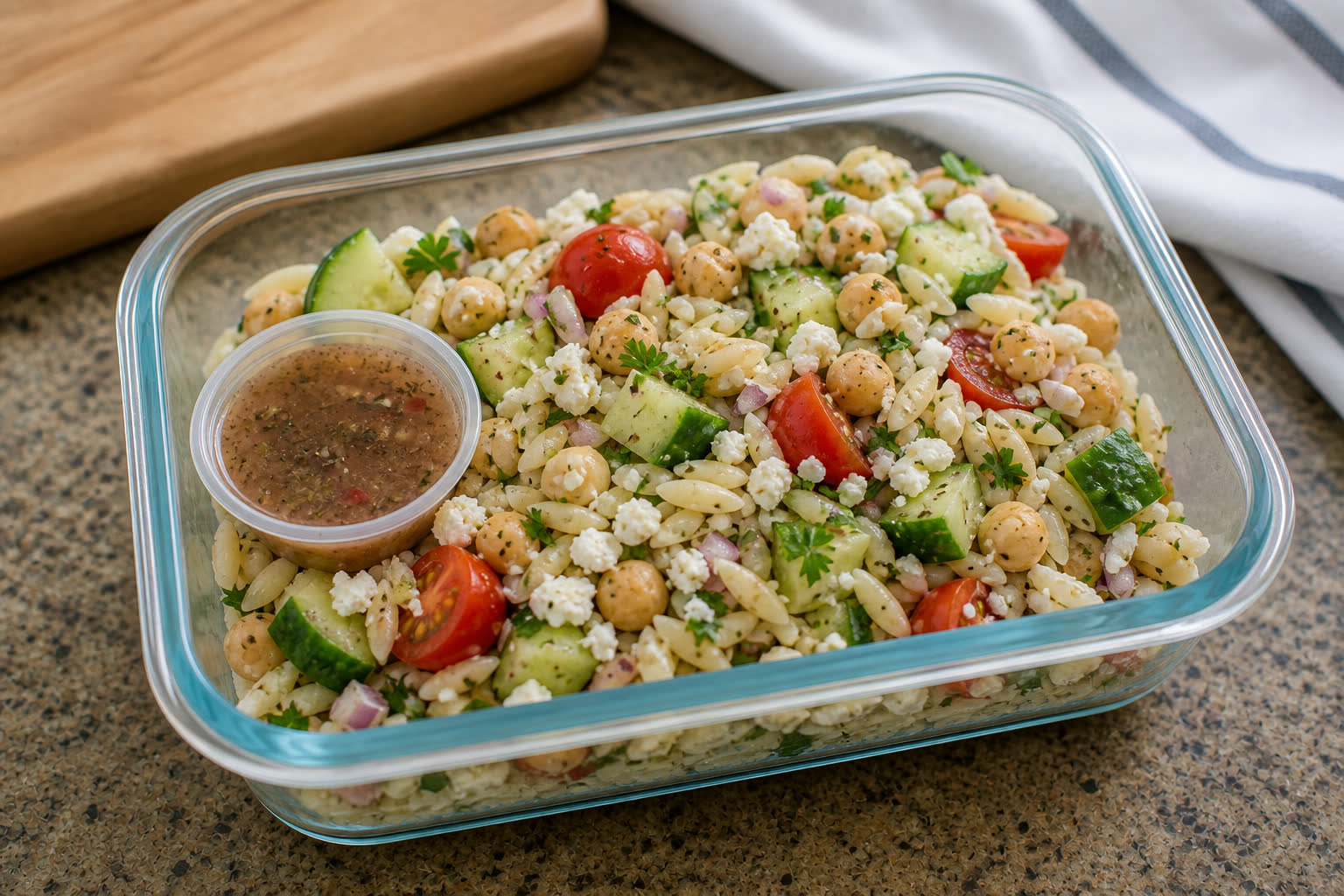
I like this one for weeks when lunch needs to be ready before the day gets loud. This greek orzo salad with chickpeas is built around chickpeas and orzo, cucumber and parsley, red wine vinaigrette, and feta. It is written for containers, a refrigerator, a commute, and a real midday break, so the packing notes matter as much as the ingredient list.
The detail I watch first is moisture. Red wine vinaigrette, juicy vegetables, warm cooked ingredients, and feta all need a little space from each other if lunch has to sit for a few hours.
Why I like this for meal prep
Cucumber and parsley works here because it can sit in a container without turning fragile immediately. The trick is keeping dressing and juicy add-ins from doing all their damage early.
The filling part of the salad is chickpeas and orzo. It helps the lunch feel complete without needing a microwave, which is the whole point of this kind of workday salad.
This salad depends on red wine vinaigrette for brightness, but not early soaking. Keep it separate unless you are using a carefully layered jar.
Personal experience
I started making versions of this when I got tired of buying lunch and then feeling annoyed by a soggy salad from the fridge.
For this one, I would pack the red wine vinaigrette in a small cup and tuck the feta into a separate bag. It is a tiny extra step, but it keeps the salad from tasting like it was packed yesterday even when it was.
For greek orzo salad with chickpeas, the part I would protect most is the feta. It is easy to add later and hard to recover once it softens.
Ingredients
I keep the ingredient list familiar because lunch prep works best when the groceries are easy to repeat.
- 3 to 4 cups cucumber and parsley
- 2 cups chickpeas and orzo
- 1/2 cup red wine vinaigrette
- 1/3 cup feta
- 1 cup chopped cucumbers or celery
- 1 cup cherry tomatoes or another sturdy vegetable
- 1 tablespoon fresh herbs
- Kosher salt and black pepper
Ingredient notes
If your cucumber and parsley look damp after washing, give them a few minutes on a clean towel. That small step makes the salad feel much fresher later.
If feta sits against wet ingredients, the flavor may be fine, but the texture will not be the same.
If your store is out of one ingredient, do not overthink it. Romaine can stand in for mixed greens, cabbage can replace romaine when you need more crunch, and chickpeas can cover for many cooked proteins in a pinch.
Step-by-step instructions
- Wash and fully dry the cucumber and parsley before chopping them into lunch-friendly pieces.
- Prepare the chickpeas and orzo and let any warm ingredient cool before it touches the greens.
- Whisk or shake the red wine vinaigrette, then portion it into small dressing cups.
- Divide the sturdy vegetables, chickpeas and orzo, and greens into four containers.
- Pack the feta separately and add that topping right before eating.
Before the containers go into the fridge, check that the red wine vinaigrette is sealed and the wettest ingredients are not sitting directly on the most delicate greens.
How to pack it for work
Cook orzo just past firm because cold pasta firms up in the fridge. That one detail is worth doing because packed salads usually fail from moisture, heat, or timing rather than from the recipe itself.
A shallow rectangular container is easiest when you want to eat straight from the container. A jar works better only when the layers are intentional: dressing, sturdy vegetables, filling ingredients, then greens.
For a commute, I like one small barrier against extra moisture: a paper towel near wet vegetables, a sealed dressing cup, or a separate bag for toppings.
One mistake I avoid now is packing the container too full. If there is no room to shake or toss the salad, lunch becomes awkward fast.
Day-two texture check
On the second day, I expect the cucumber and parsley to soften a little but still taste fresh. If the feta waits until lunch and the red wine vinaigrette stays in a cup, the salad keeps enough contrast.
If you pack lunch before work, keep the red wine vinaigrette and feta outside the main mix. Add both at lunch, then toss the container gently so the bottom does not get all the flavor.
The mistake I would avoid is mixing everything just because the container looks prettier that way. Pretty layers matter less than keeping the cucumber and parsley from sitting in dressing.
What makes this useful
What makes greek orzo salad with chickpeas useful is that it answers a real lunch problem instead of just filling a bowl. You get something cold, filling, and packable without depending on a microwave or a long lunch break.
If I were prepping this during a normal week, I would build two containers first and keep the remaining cucumber and parsley, chickpeas and orzo, and red wine vinaigrette as components. That gives you a little flexibility if plans change.
This is also where the narrow focus of Workday Salads matters. I am not trying to make every possible recipe; I am trying to make the lunch-container details clear enough that the salad still works after real refrigerator time.
If you make greek orzo salad with chickpeas once, write down the part that changed most by lunch. For one salad it might be watery greens; for another it might be a topping that needed its own cup. That note is more useful than trying to memorize a perfect formula.
Storage notes
I like this best within three to four days, even if some ingredients technically last longer. The texture is the part that changes first.
Keep the containers cold, and use your judgment with leftovers. If something smells off, looks slimy, or sat out too long, I would rather toss it than try to rescue lunch.
Small tips that help
- Dry greens thoroughly before packing.
- Cool cooked ingredients before closing containers.
- Keep dressing separate until lunch unless using a jar layering method.
- Add feta at the last minute for better texture.
- Taste the red wine vinaigrette before packing; cold food often needs a little extra acidity or salt.
Variations
For a sturdier version, lean harder on cabbage, kale, or romaine. For a softer version, use more cucumber and parsley and eat that container earlier.
You can swap the filling with chicken, tuna, eggs, chickpeas, beans, tofu, shrimp, steak, or cottage cheese. The important part is cooling cooked ingredients before they touch the greens.
If you want a softer, fork-friendly salad, chop everything smaller. If you want it to feel more like a bowl from a cafe, leave the pieces a little larger and pack dressing on the side.
FAQ
Which container of Greek Orzo Salad with Chickpeas should I eat first?
Eat the container with the wettest or most delicate ingredients first. The sturdier lunches can usually wait closer to three to four days, especially when the dressing is still in its own cup.
How much red wine vinaigrette should I pack for greek orzo salad with chickpeas?
Start with a small dressing cup instead of flooding the container. Cold salads often need brightness, but too much dressing is the fastest way to make lunch feel tired by noon.
Does orzo clump after chilling?
It can. Rinse it briefly, toss it with a little dressing, and fluff it before dividing it into containers.
Can chickpeas replace the cheese?
They can make the salad more filling, but they do not replace the salty bite of feta. Add olives or extra herbs if you skip the cheese.
Should the feta go in the main container for greek orzo salad with chickpeas?
That works, but I keep cheese off to one side so it does not sit directly in dressing. It tastes better when it is chilled and not swimming in liquid.
Would you use a jar or a shallow container for greek orzo salad with chickpeas?
A shallow airtight container is easiest here. Put cucumber and parsley on one side, chickpeas and orzo on the other, and keep the red wine vinaigrette in a small cup so lunch does not turn soggy in the bag.
How can I make Greek Orzo Salad with Chickpeas more filling without making it heavy?
Add a boiled egg, chickpeas, white beans, lentils, tofu, chicken, tuna, or a small scoop of cooked grains. Keep the extra ingredient cool before closing the lid.
Food storage links I keep handy
These are general food-safety references I use for refrigerator and leftover basics. They are not diet, medical, or nutrition advice.
You may also like
 Pasta Salads
Pesto Chicken Pasta Salad for Meal Prep
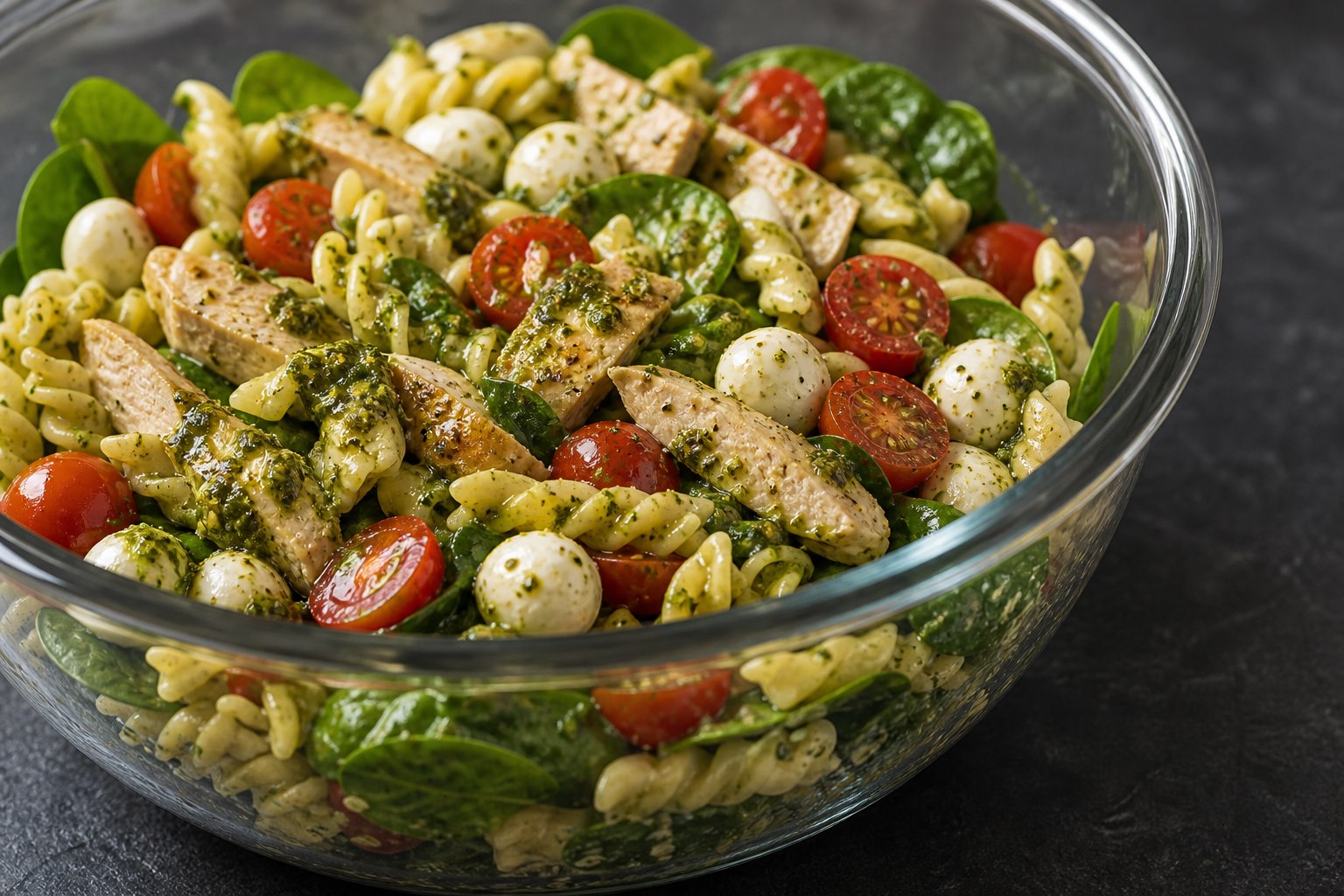
Pesto Chicken Pasta Salad for Meal Prep: chicken and short pasta, spinach and tomatoes, lemon pesto dressing, and mozzarella pearls for cold pasta lunches.
- Time
- 35 minutes
- Serves
- 4 lunches
 Pasta Salads
Couscous Salad with Roasted Vegetables
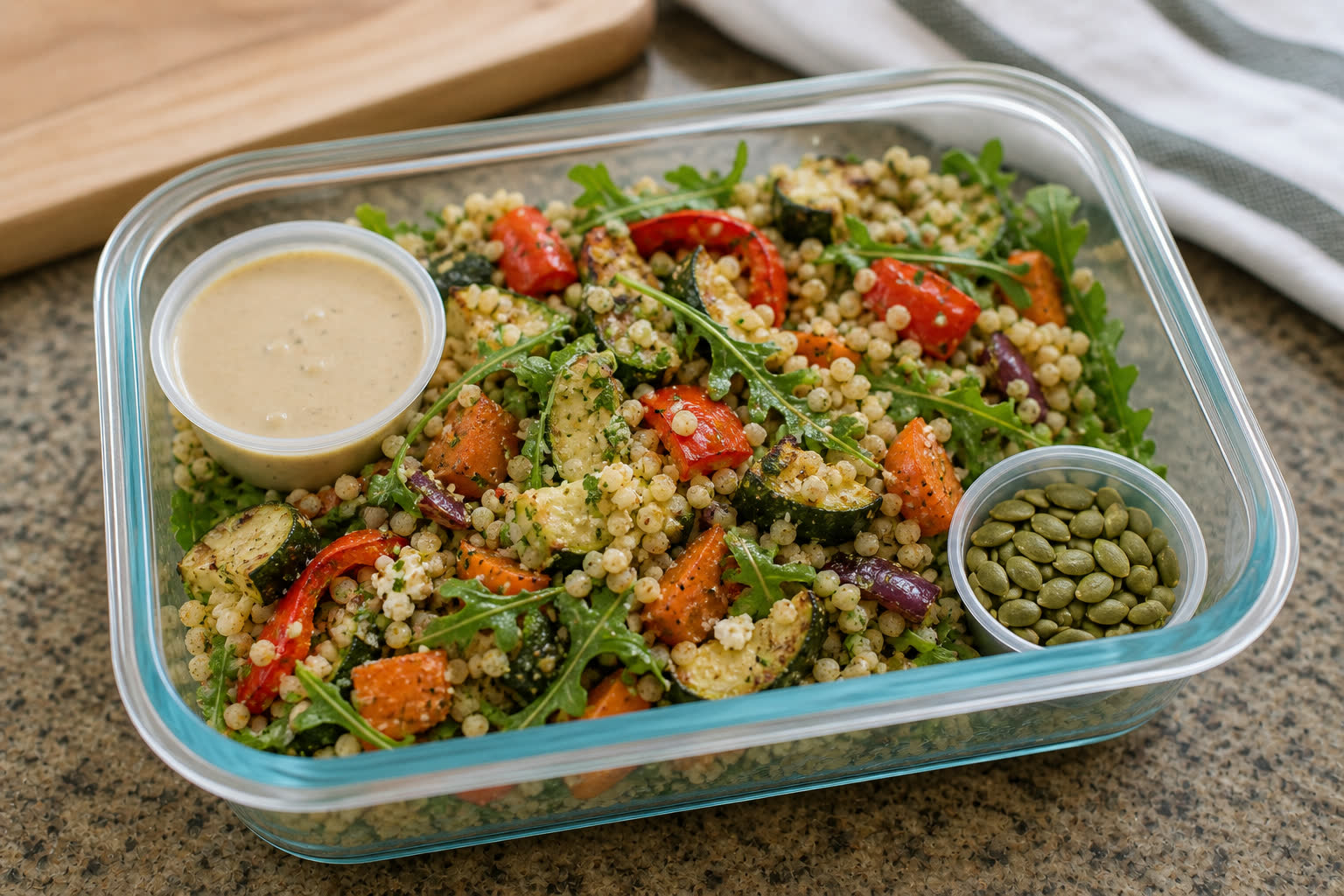
Couscous Salad with Roasted Vegetables: couscous and roasted vegetables, arugula, lemon tahini dressing, and pumpkin seeds for vegetable-forward lunches.
- Time
- 35 minutes
- Serves
- 4 lunches
 Pasta Salads
Farro Salad with Edamame and Carrots
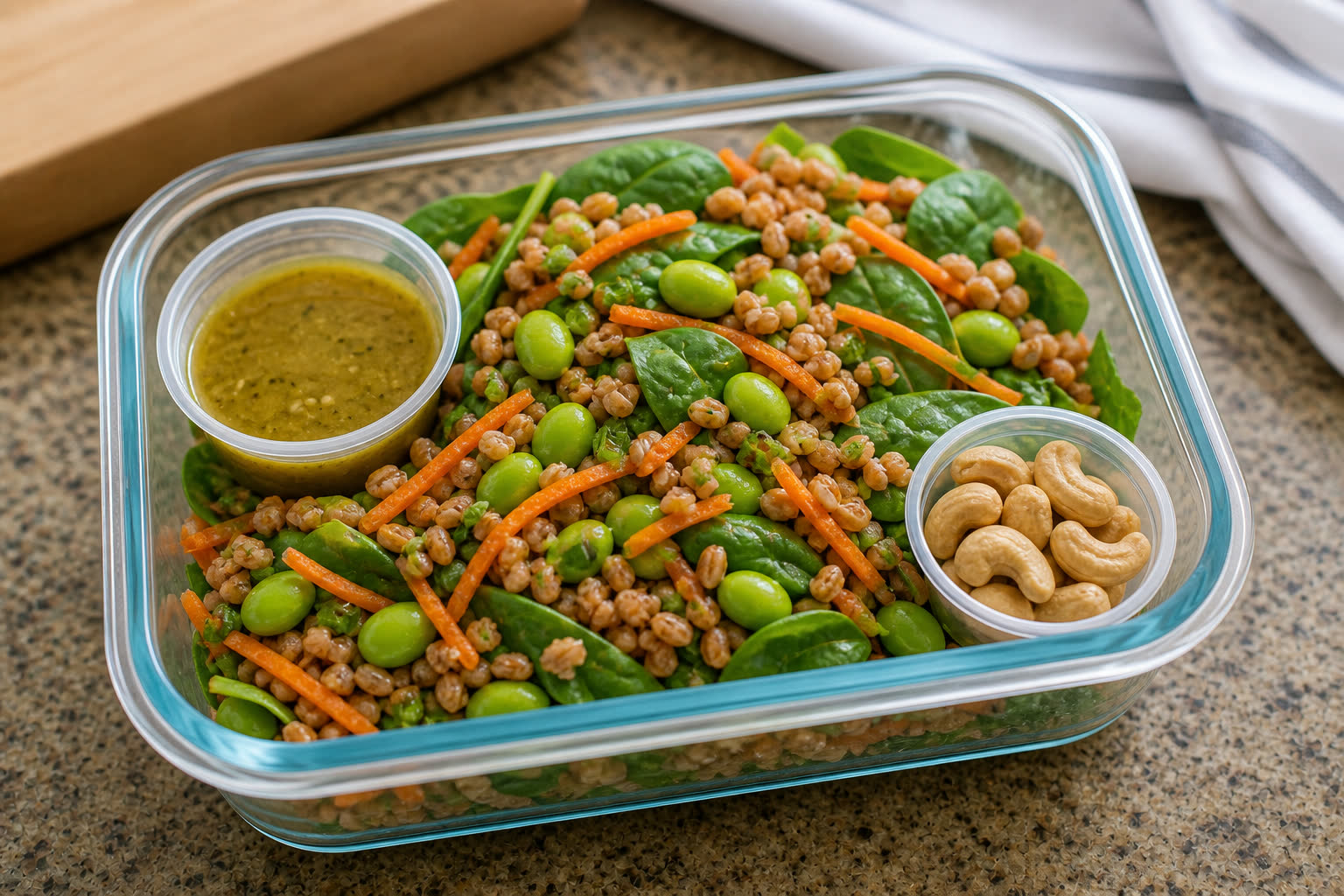
Farro Salad with Edamame and Carrots: farro and edamame, shredded carrots and spinach, ginger lime dressing, and cashews for chewy grain salads.
- Time
- 35 minutes
- Serves
- 4 lunches

About Emma Reed
Emma Reed is a Midwest-based home cook and lunch-prep writer. She focuses on make-ahead salads, simple dressings, and practical container notes from everyday home-kitchen testing. She is not a dietitian, doctor, or professional chef.
Each Workday Salads article is written around real lunch-prep questions: what gets soggy, what should stay separate, and how the salad behaves after refrigerator time.
Read more about the author How recipes are tested