Pasta Salads
Farro Salad with Edamame and Carrots
Farro Salad with Edamame and Carrots: farro and edamame, shredded carrots and spinach, ginger lime dressing, and cashews for chewy grain salads.
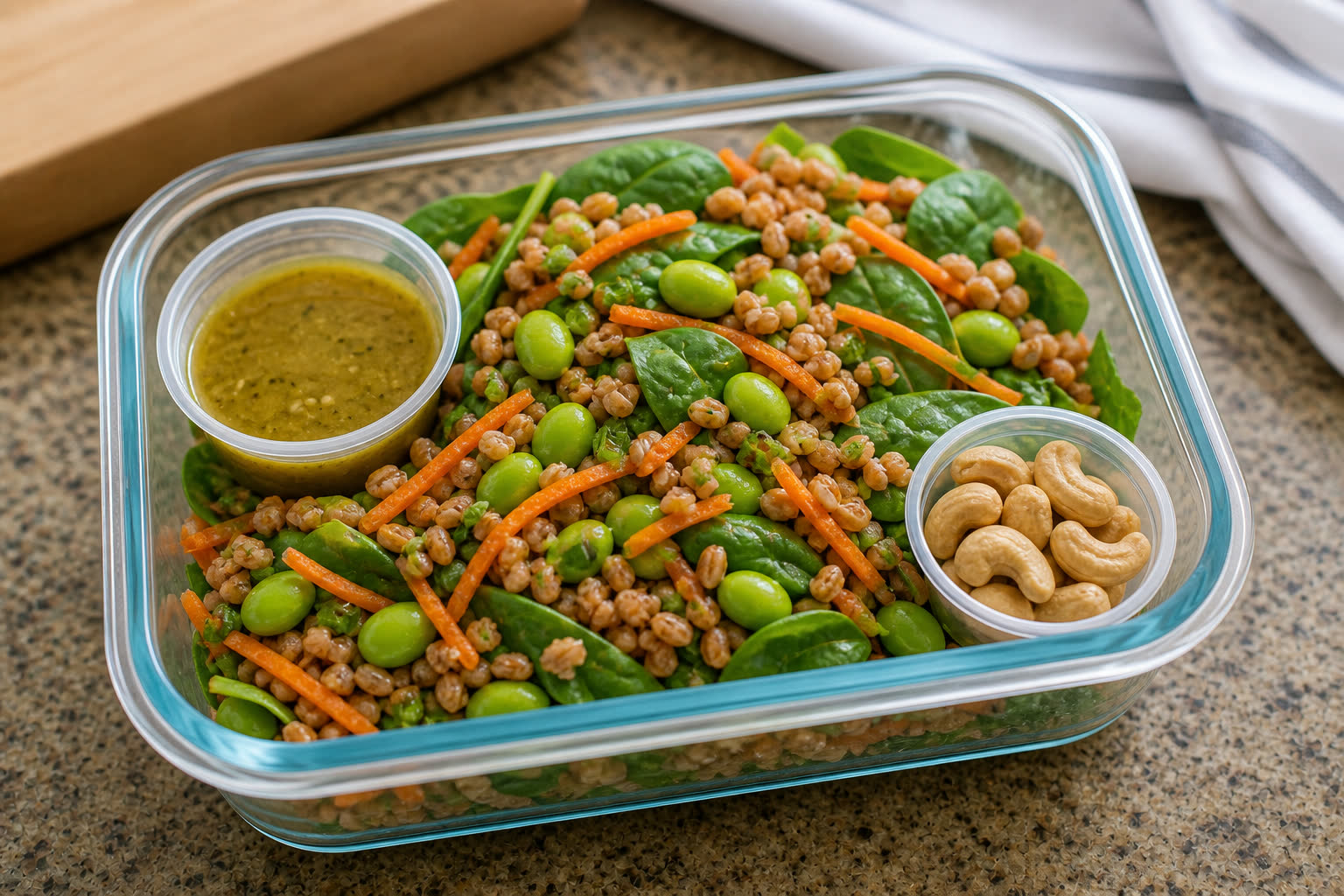
The whole point here is to make lunch easier without pretending salad prep is magic. This farro salad with edamame and carrots is built around farro and edamame, shredded carrots and spinach, ginger lime dressing, and cashews. It is written for containers, a refrigerator, a commute, and a real midday break, so the packing notes matter as much as the ingredient list.
I care less about perfect plating here and more about how the salad behaves at noon. The goal is a lunch that still has contrast: cool greens, enough flavor, and something with texture left.
Why I like this for meal prep
The base is shredded carrots and spinach, so the salad has some crunch before the softer ingredients go in. That balance matters after a night in the fridge.
Farro and edamame makes the lunch more filling, but it should not be packed hot or pressed hard into the greens. I let it cool and give it its own section.
Ginger lime dressing brings the flavor, but it also brings moisture. A small cup keeps that moisture under control until you are ready to eat.
Personal experience
I like this style of salad because it gives me a real lunch without asking for much attention in the morning.
This is not a salad I would drown in dressing before packing. Cold ingredients need a little more seasoning than warm food, but they do not need to sit in dressing all morning.
The question I use is simple: what will still taste good cold tomorrow? That keeps the recipe honest about what belongs in the container and what should wait.
Ingredients
This is not a recipe that depends on one perfect brand or specialty item. Fresh texture matters more than a complicated shopping list.
- 3 to 4 cups shredded carrots and spinach
- 2 cups farro and edamame
- 1/2 cup ginger lime dressing
- 1/3 cup cashews
- 1 cup chopped cucumbers or celery
- 1 cup cherry tomatoes or another sturdy vegetable
- 1 tablespoon fresh herbs
- Kosher salt and black pepper
Ingredient notes
I like to prep shredded carrots and spinach before anything saucy so there is time for extra water to shake off or dry on a towel.
Cashews can go in a tiny cup, bag, or corner of the lunch box. What matters is keeping it away from dressing.
For a cheaper version, lean on beans, eggs, cabbage, carrots, and pasta. Those ingredients are not glamorous, but they hold up well and make lunch feel planned.
Step-by-step instructions
- Wash and fully dry the shredded carrots and spinach before chopping them into lunch-friendly pieces.
- Prepare the farro and edamame and let any warm ingredient cool before it touches the greens.
- Whisk or shake the ginger lime dressing, then portion it into small dressing cups.
- Divide the sturdy vegetables, farro and edamame, and greens into four containers.
- Pack the cashews separately and add that topping right before eating.
If anything still feels warm, leave the lid off for a few more minutes. A little patience here protects the texture later.
How to pack it for work
Spread farro on a sheet pan to cool quickly before storing. It is a small step, but it keeps the lunch closer to freshly assembled instead of fully leftover.
Do not pack this so tightly that you cannot toss it. A little empty space in the container is useful, especially once the ginger lime dressing goes on.
Very wet vegetables can sit on a paper towel for the first part of the morning. Remove it before eating so it does not end up in the salad.
I also avoid slicing tomatoes too small for prep containers. Halved cherry tomatoes usually behave better than chopped larger tomatoes.
Day-two texture check
If I pack this for more than one lunch, I use the first container as a texture check. If the shredded carrots and spinach released water, I pack the next one with the wet ingredients farther to the side.
If your commute is long, put the ginger lime dressing in a sealed cup and keep the cold pack close to the farro and edamame. The salad will taste better when it stays properly chilled.
If the container looks packed to the lid, take a handful out or use a bigger box. Crowded salad is hard to toss and usually bruises the greens.
What makes this useful
The value in farro salad with edamame and carrots is the small bit of control it gives you over a busy day: dressing packed safely, texture protected, and enough food to feel like lunch.
The easiest way to make it feel less repetitive is to change only one thing: the topping, the dressing amount, or the side you pack with it. Rebuilding the whole salad every day is not necessary.
Those are small notes, but they are useful ones. They help you decide what to prep Sunday, what to add Monday morning, and what should wait until lunch.
The best version of farro salad with edamame and carrots is the one you can repeat without thinking too hard. Keep the parts that worked, change the part that got soggy or bland, and the next lunch is already easier.
Storage notes
This is not a forever salad. I would treat three to four days as the useful window and expect the first container to taste the brightest.
Cold storage matters more than clever packing. If a container sat out too long, I would skip it, even if the salad still looks decent.
Small tips that help
- Dry greens thoroughly before packing.
- Cool cooked ingredients before closing containers.
- Keep dressing separate until lunch unless using a jar layering method.
- Add cashews at the last minute for better texture.
- Taste the ginger lime dressing before packing; cold food often needs a little extra acidity or salt.
Variations
If the greens at the store look tired, build the salad around cabbage, romaine hearts, or another crisp vegetable instead of forcing it.
For a cheaper batch, beans, eggs, cabbage, carrots, and pasta usually stretch the salad without making it feel like a compromise.
For a lighter-feeling version, use more crunchy vegetables and less creamy dressing. For a cozier version, add roasted vegetables or cooked grains and eat that container earlier in the week.
FAQ
Does Farro Salad with Edamame and Carrots still taste good after a night in the fridge?
Yes, as long as the ginger lime dressing and cashews stay separate. The salad tastes most fresh on day one, still useful on day two, and depends more on careful packing after that.
Can I toss farro salad with edamame and carrots with ginger lime dressing before leaving for work?
I would only toss a small portion if you know you are eating soon. For a packed work lunch, keep the ginger lime dressing separate and give everything a quick mix right before eating.
How do I keep farro chewy, not hard?
Cook it until it is fully tender, cool it spread out, and add a little dressing before chilling. Under-cooked farro gets stubborn when cold.
Can I use frozen edamame?
Yes. Thaw it, drain it well, and make sure it is cold before packing so it does not steam the spinach.
When should I add the cashews for farro salad with edamame and carrots?
Add cashews right before eating. I like packing them in a tiny bag or side cup because even a little moisture can steal the best texture.
Would you use a jar or a shallow container for farro salad with edamame and carrots?
A shallow airtight container is easiest here. Put shredded carrots and spinach on one side, farro and edamame on the other, and keep the ginger lime dressing in a small cup so lunch does not turn soggy in the bag.
How can I make Farro Salad with Edamame and Carrots more filling without making it heavy?
Add a boiled egg, chickpeas, white beans, lentils, tofu, chicken, tuna, or a small scoop of cooked grains. Keep the extra ingredient cool before closing the lid.
Food storage links I keep handy
These are general food-safety references I use for refrigerator and leftover basics. They are not diet, medical, or nutrition advice.
You may also like
 Pasta Salads
Pesto Chicken Pasta Salad for Meal Prep
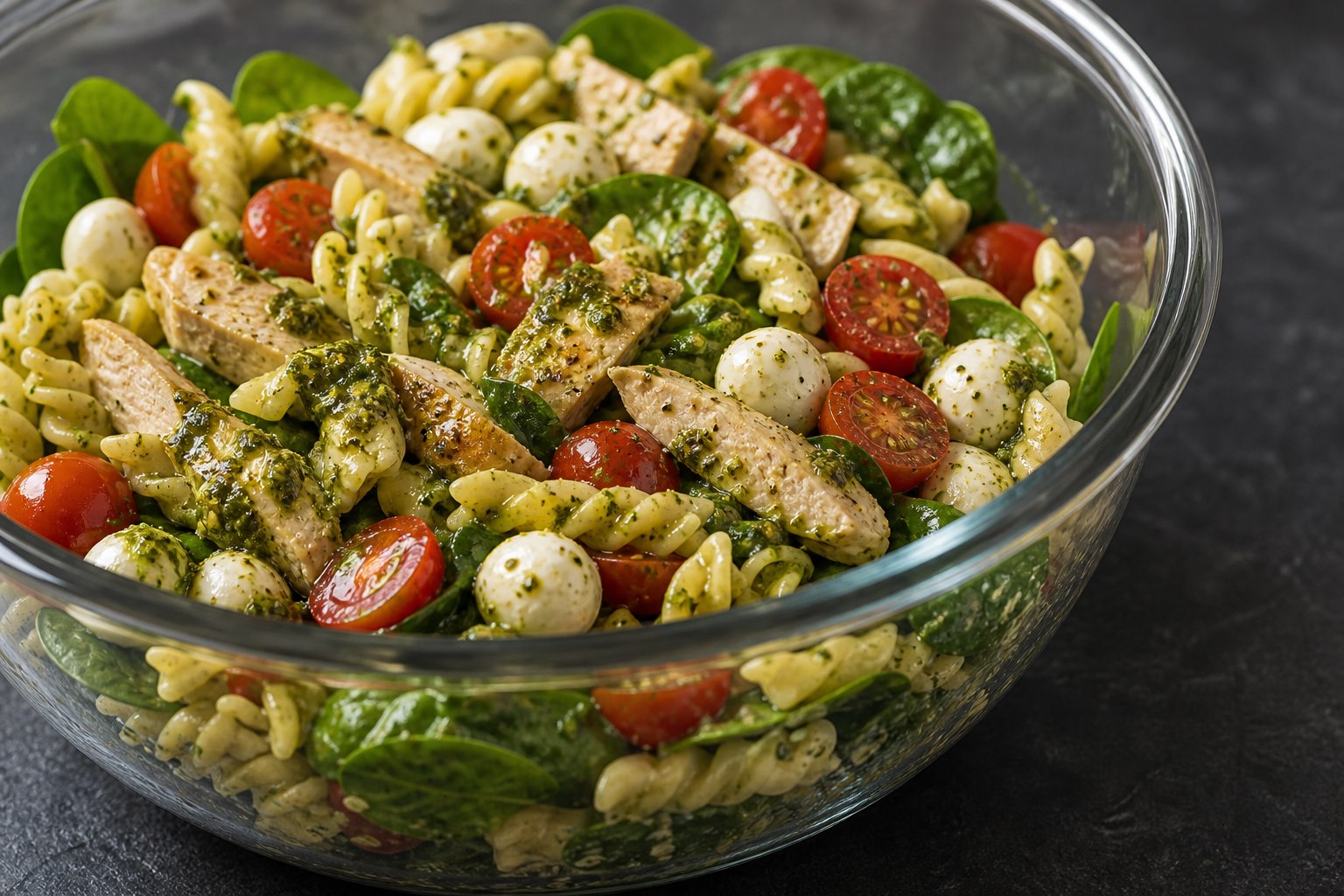
Pesto Chicken Pasta Salad for Meal Prep: chicken and short pasta, spinach and tomatoes, lemon pesto dressing, and mozzarella pearls for cold pasta lunches.
- Time
- 35 minutes
- Serves
- 4 lunches
 Pasta Salads
Greek Orzo Salad with Chickpeas
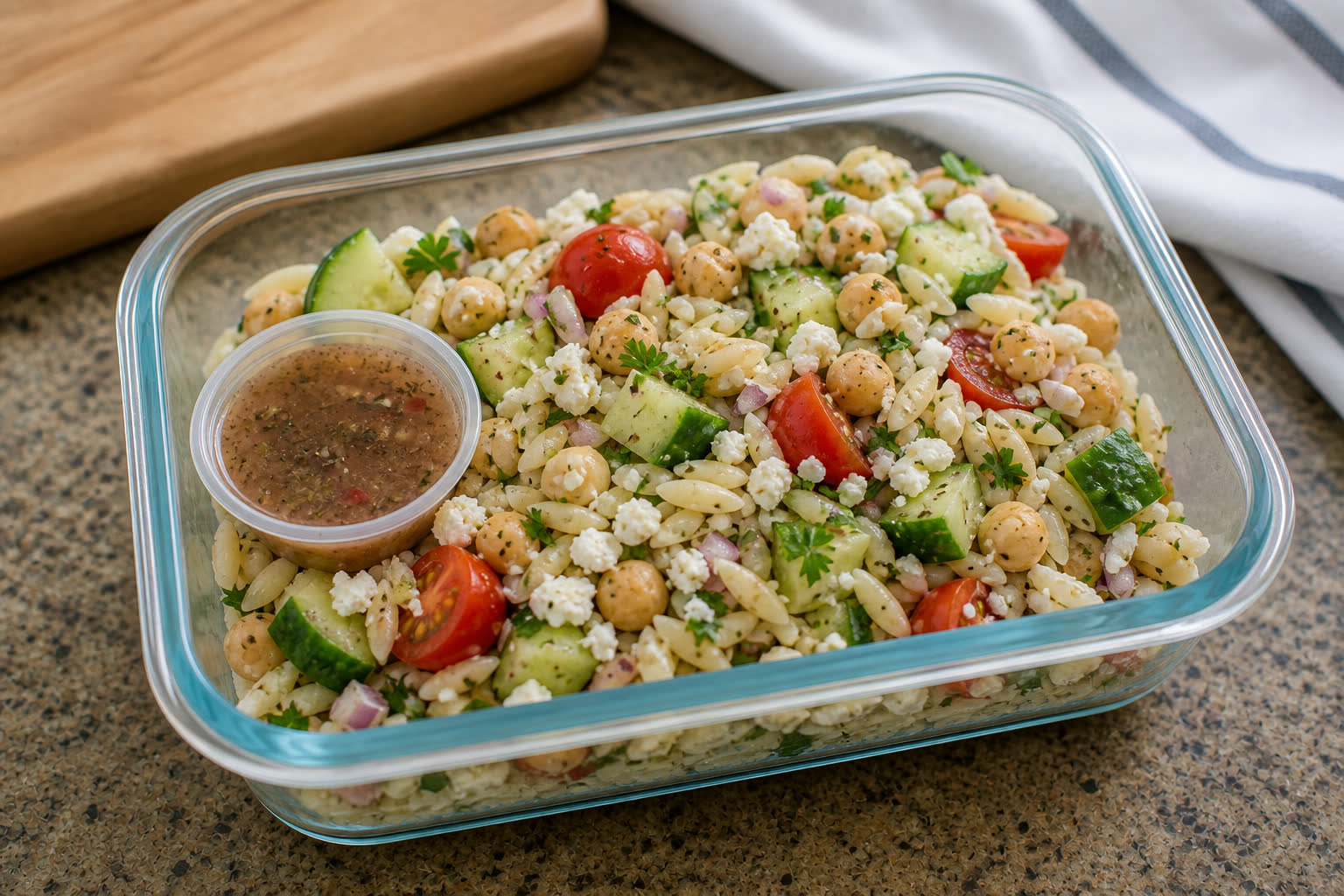
Greek Orzo Salad with Chickpeas: chickpeas and orzo, cucumber and parsley, red wine vinaigrette, and feta for make-ahead picnic-style lunches.
- Time
- 35 minutes
- Serves
- 4 lunches
 Pasta Salads
Couscous Salad with Roasted Vegetables
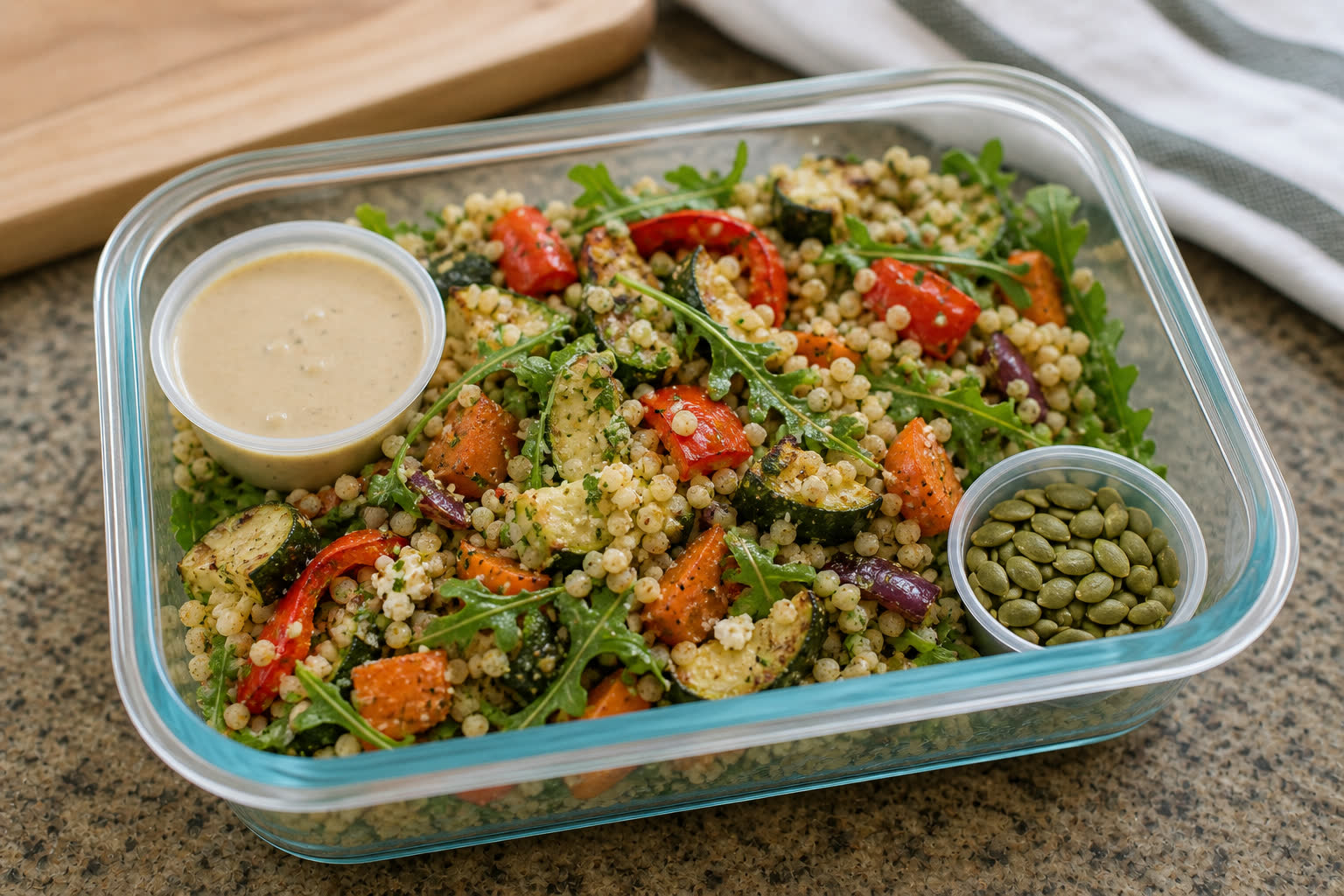
Couscous Salad with Roasted Vegetables: couscous and roasted vegetables, arugula, lemon tahini dressing, and pumpkin seeds for vegetable-forward lunches.
- Time
- 35 minutes
- Serves
- 4 lunches

About Emma Reed
Emma Reed is a Midwest-based home cook and lunch-prep writer. She focuses on make-ahead salads, simple dressings, and practical container notes from everyday home-kitchen testing. She is not a dietitian, doctor, or professional chef.
Each Workday Salads article is written around real lunch-prep questions: what gets soggy, what should stay separate, and how the salad behaves after refrigerator time.
Read more about the author How recipes are tested